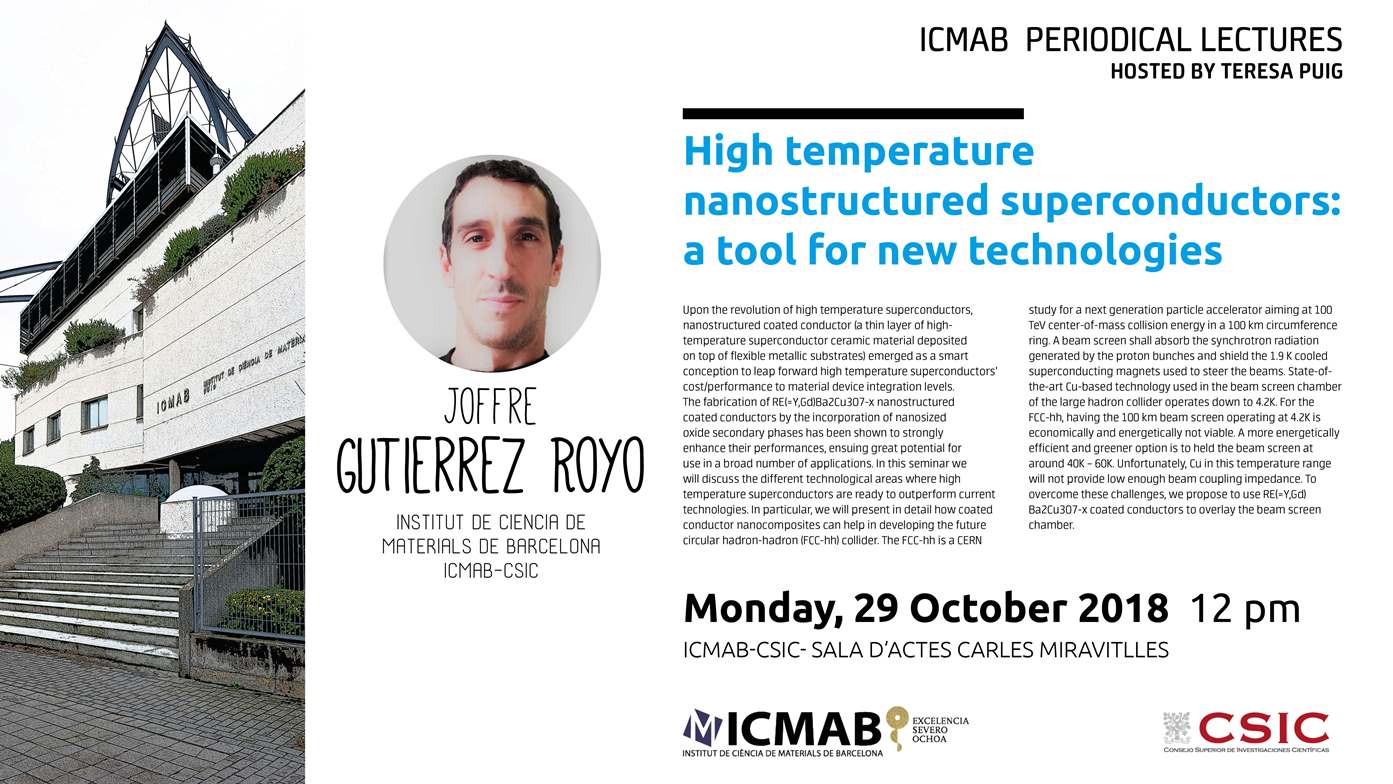
ICMAB Periodical Lecture_Joffre Gutiérrez High temperature nanostructured superconductors: a tool for new technologies”_29 Oct_12 pm

 
Dear friends and colleagues,
 
It is a pleasure for us to invite you to the in-house ICMAB Periodical Lecture entitled:
 
High temperature nanostructured superconductors: a tool for new technologies
 
by Joffre GUTIÉRREZ ROYO, Institut de Ciencia de Materials de Barcelona (ICMAB-CSIC)
 
Monday, 29 October 2018 at 12 pm
ICMAB – Sala d’Actes Carles Miravitlles
Abstract:
Upon the revolution of high temperature superconductors, nanostructured coated conductor (a thin layer of high-temperature superconductor ceramic material deposited on top of flexible metallic substrates) emerged as a smart conception to leap forward high temperature superconductors’ cost/performance to material device integration levels.The fabrication of RE(=Y,Gd)Ba2Cu3O7-x nanostructured coated conductors by the incorporation of nanosized oxide secondary phases has been shown to strongly enhance their performances, ensuring great potential for use in a broad number of applications.
 
In this seminar we will discuss the different technological areas where high temperature superconductors are ready to outperform current technologies. In particular, we will present in detail how coated conductor nanocomposites can help in developing the future circular hadron-hadron (FCC-hh) collider. The FCC-hh is a CERN study for a next generation particle accelerator aiming at 100 TeV center-of-mass collision energy in a 100 km circumference ring. A beam screen shall absorb the synchrotron radiation generated by the proton bunches and shield the 1.9 K cooled superconducting magnets used to steer the beams. State-of-the-art Cu-based technology used in the beam screen chamber of the large hadron collider operates down to 4.2K. For the FCC-hh, having the 100 km beam screen operating at 4.2K is economically and energetically not viable.
 
A more energetically efficient and greener option is to held the beam screen at around 40K – 60K. Unfortunately, Cu in this temperature range will not provide low enough beam coupling impedance. To overcome these challenges, we propose to use RE(=Y,Gd)Ba2Cu3O7-x coated conductors to overlay the beam screen chamber.
 
Hosted by Teresa Puig, Group Leader of the SUMAN group


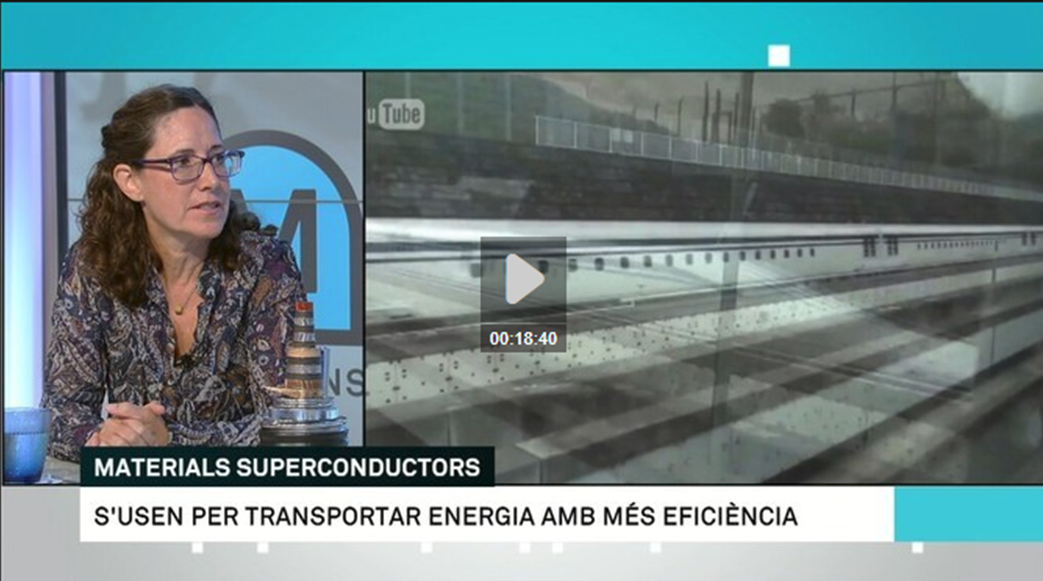
Superconducting materials and levitation of magnets with Teresa Puig in “Els Matins de TV3

On Thursday 11 October 2018, the programme “Els Matins de TV3”, directed by Lídia Heredia, interviewed researcher Teresa Puig about the superconducting materials, in their section devoted to science, and presented by Daniel Arbós. The section, of more than 18 minutes long, explains what superconducting materials are, what are their main applications, and shows the levitation experiment. Enjoy the view!   video

Congratulations to Dr. Bernat Mundet, new SUMAN-ICMAB graduate!

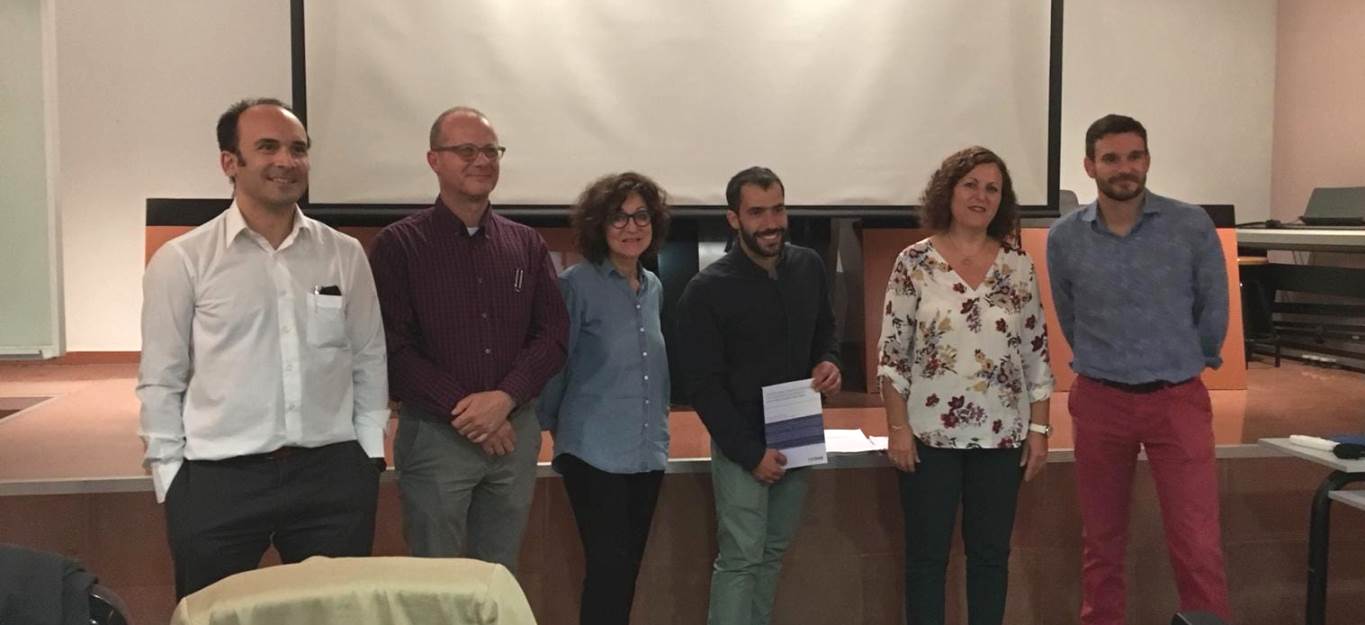
Dr. Bernat Mundet defended his PhD thesis on “Atomic-scale characterization of structural distortions in perovskite oxide thin films”Monday, 9 October 2018, with great success, surrounded by his friends, family and colleagues! Congratulations!
Title: Atomic-scale characterization of structural distortions in perovskite oxide thin films

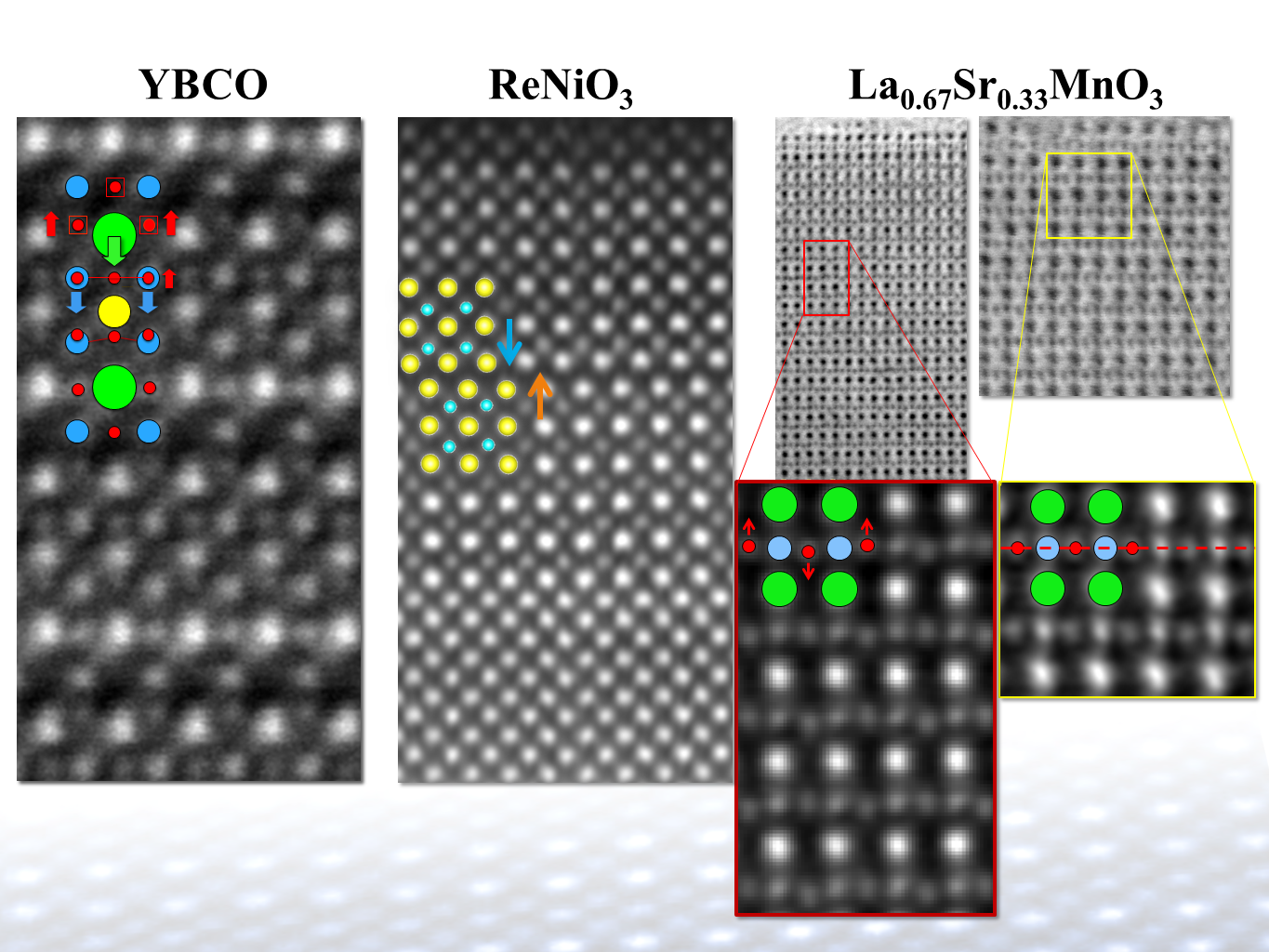
Date: Monday, 8 October 2018 Time: 4:30 pm Venue: Sala d’Actes Carles Miravitlles, ICMAB Abstract: In this thesis, we investigate the structural distortions appearing in three different kind of perovskite oxides that are fabricated as thin films following a chemical solution deposition process.  In the first case, we study how the YBCO lattice is distorted around its most common defect, this is the Y124 intergrowth. Secondly, we investigate which structural mechanisms help to accommodate the strain generated by the substrate mismatch in nickelate thin films. Finally, we study how the spatial confinement influences both the physical and structural properties of La0.7Sr0.3MnO3/SrTiO3 heterostructures. Supervisor:
  • Jaume Gázquez, Superconducting Materials and Large Scale Nanostructures (ICMAB)
PhD Committee: 
  • President: Francesca Peiró (UB)
  • Secretary: Felip Sandiumenge (ICMAB)
  • Vocal: César Magén (Instituto de Ciencia de Materiales de Aragón (ICMA))

“El reto de ser científicas y madres” by Valentina Raffio in El Periódico


On Monday, 24 September, this article appeared in the printed version in the newspaper “El Periódico”, both in the Spanish and Catalan version. The article is written by the journalist Valentina Raffio, and features our SUMAN researcher, Teresa Puig, in the framework of the project #LasCientíficasCuentan, an initiative by CSIC-Brussels and funded by the FECYT. We transcribe here the text.

Continue reading

Teresa Puig, ERC researcher, in #LasCientíficasCuentan

The project “Las Científicas Cuentan” is an initiative of the CSIC Delegation in Brussels financed by the FECYT. The aim of the project is to bring basic science to the general public, through the story of women scientists who have been awarded with a ERC project during the past years. From SUMAN, Teresa Puig (ERC-Advanced Grant) participate in the project.

Continue reading

21 Març 2018: xerrada a càrreg de Prof. Teresa Puig “SUPERCONDUCITIVTAT: Un fenòmen quàntic que està contribuint al canvi energètic’

Aquest dimecres 21 de Març a les 12.15 h, els companys de l’Associació Catalana d’estudiants de Física i l’ICMAB organitzen la conferència ‘LA SUPERCONDUCITIVTAT: Un fenòmen quàntic que està contribuint al canvi energètic’ a càrrec de la Prof. Teresa Puig ( a l’aula C3/022 de la Facultat de Ciències de la UAB)

Continue reading

Epitaxial YBa2Cu3O7−x nanocomposite films and coated conductors from BaMO3 (M = Zr, Hf) colloidal solutions

X. Obradors, T. Puig, Z. Li, C. Pop, B. Mundet, N. Chamorro, F. Vallés, M. Coll, S. Ricart, B. Vallejo, F. Pino, A. Palau, J. Gázquez, J. Ros and A. Usoskin, Supercond. Sci. Technol. 2018 044001

DOI: https://doi.org/10.1088/1361-6668/aaaad7

Continue reading

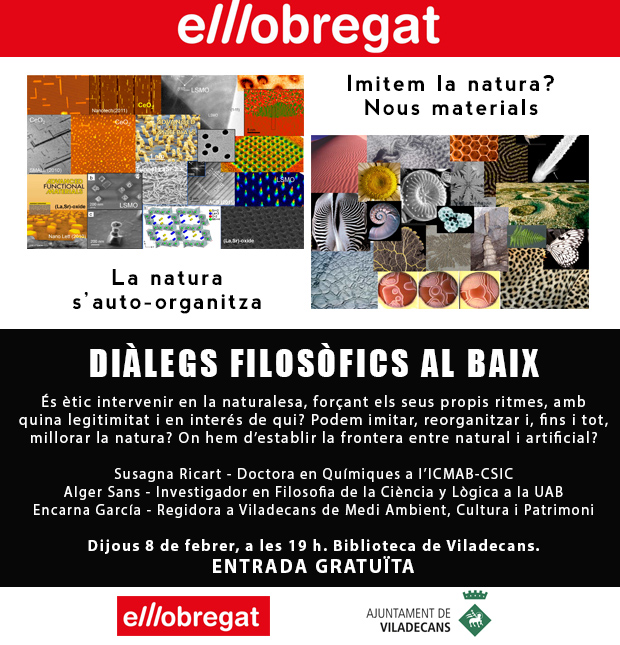
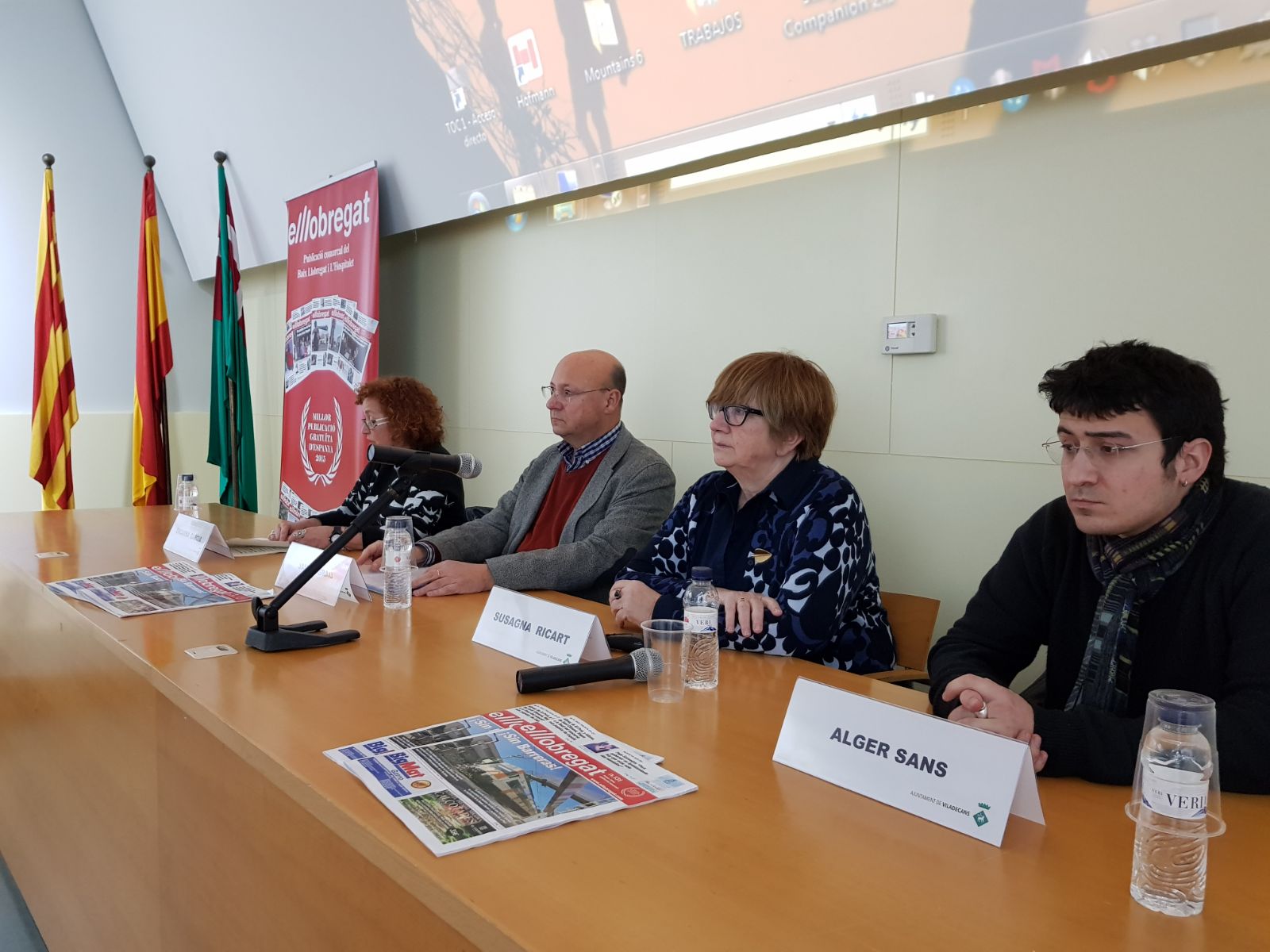
8 febrer 2018: Susagna Ricart als “Diàlegs Filosòfics al Baix”

El passat 8 de febrer, la nostra investigadora, Susagna Ricart, va ser convidada per la publicació comarcal El Llobregat per participar en una nova edició de “Diàlegs Filosòfics al Baix”, en aquest cas, amb l’ètica i la naturalesa com a protagonistes.

Susagna va fer una excel·lent exposició de les possibilitats i oportunitats que representa la tecnologia, fonamentalment, a partir de l’impuls de la nanotecnologia: “A partir d’àtoms i molècules, bàsicament, les agrupem per obtenir materials, dispositius i, fins i tot, màquines que tenen noves aplicacions i propietats”.

També va explicar que treballen en dimensions inferiors als virus o els anticossos, un segment que ha permès impulsar, per exemple, la denominada superconducció: “Fa 100 anys, Heike Kamerlingh Onnes va descobrir que a temperatures molt baixes s’aconsegueix una superconducció perquè els àtoms, no se sap per què, s’agrupen en parells i no xoquen, el que fa que no es desprengui energia i, per tant, la conducció és més efectiva”.

Ja a finals del segle XX, aquest camp va millorar a partir d’aconseguir aquesta conducció a partir de temperatures molt més altes, el que permet refredar el material només amb nitrogen, molt abundant a l’atmosfera. Aquest fenomen ha impulsat, per exemple, aplicacions com ‘efecte meissner’ –atracció magnètica molt potent- o la ressonància magnètica, considerada la segona gran revolució després dels Raigs ‘X’.

Segons Ricart, doncs, aquest camp té molta projecció i usos tant en el camp de la medicina, l’energia i la tecnologia. I, en el fons, té molt a veure amb els processos naturals, perquè, tal i com ha explicat, la natura està plena de processos nanotecnològics tant a les espècies animals com vegetals. Identificar-los pot derivar en grans oportunitats per l’ésser humà.

  MÉS INFORMACIÓ

Institut de Ciència de Materials de Barcelona ICMAB CSIC

Address

Campus de la UAB, 08193 Bellaterra, Barcelona, Spain
+34 935 801 853 ext 371 
hr_suman@icmab.es